Accenture · 2025–2026
Product Design
at Scale.
Almost two years embedded in client teams across Healthcare, Finance, and Public Sector — switching contexts fast, learning each domain from the inside, and designing where real decisions get made.
Context
Accenture has been one of the most intense and formative experiences of my career. Three sectors, three completely different worlds — and in each one I had to learn fast, adapt to the client's culture, and deliver under real constraints. Usually on my own, which forces you to grow in ways a team environment simply doesn't.
01 — Internal Initiative
Building the AI design workflow from the inside.
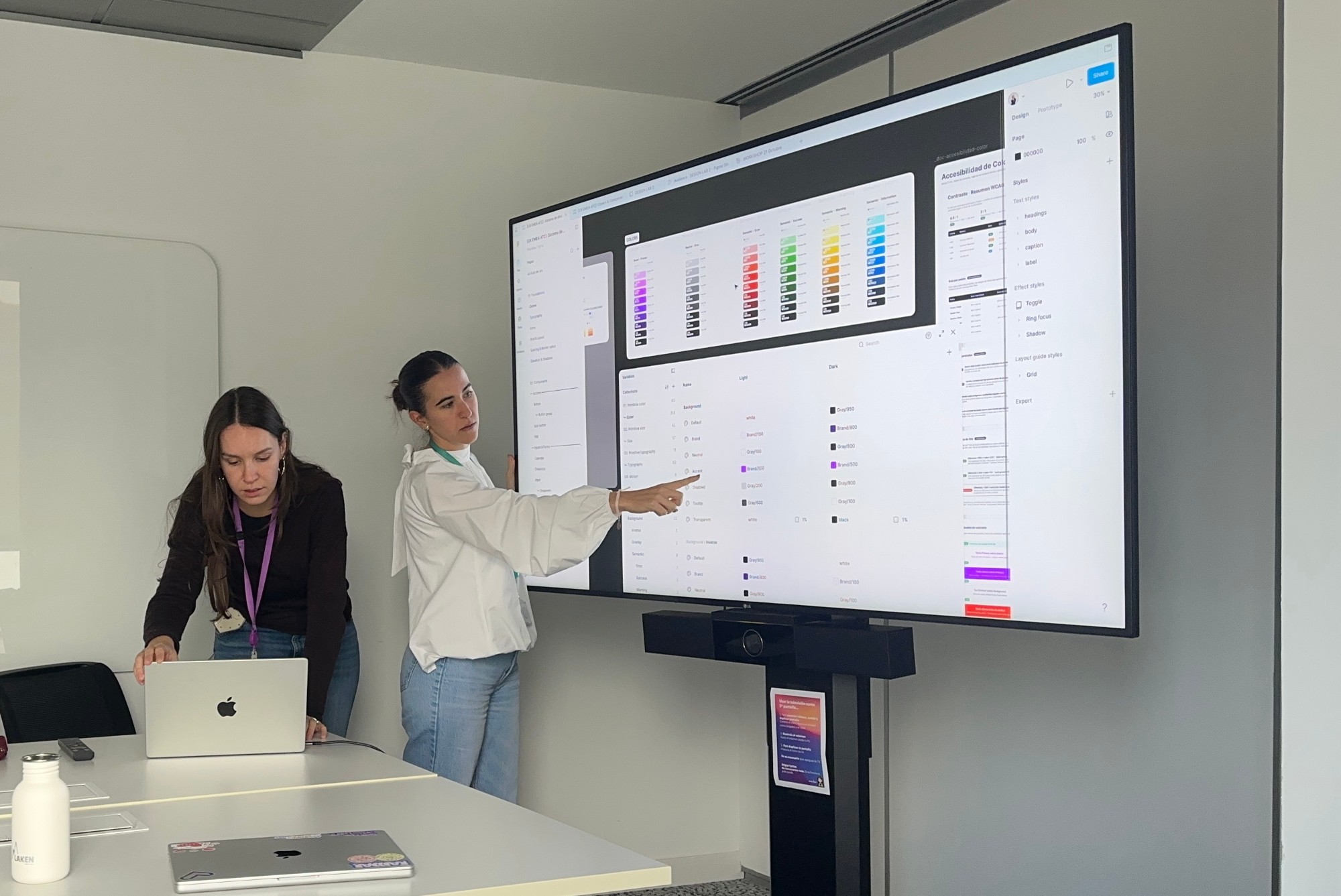
The EMEA ATC design team needed to move faster — documenting components, building flow covers, maintaining the design system — without that work eating all the design time. Together with another designer, we built a reusable AI-assisted workflow where Claude acts as a documentation agent that any designer on the team can run, without writing a single line of code.
AI Workflow · Design System · Workshop series · Internal Tool
UX Agent — AI-Assisted Design Workflow
An internal initiative at Accenture EMEA ATC to establish a reusable AI-assisted design workflow using Claude Code and the Figma MCP. The system lets any designer on the team generate, document and maintain Figma files through natural language. Delivered through three fully documented Figma files and a hands-on workshop series.
My role
- Co-led the initiative with another mid-level designer
- Built the full Covers & Components reference file
- Developed the AI documentation agent (Claude Code + Figma MCP)
- Documented 17 components — specs, a11y, variants, DEV descriptions
- Designed and ran both Design Lab workshops
Key outcomes
- Complete component specs generated in under an hour
- 25+ designers onboarded to AI-assisted Figma workflows
- Reusable prompt system any designer can run independently
- Documentation that works for designers and developers alike
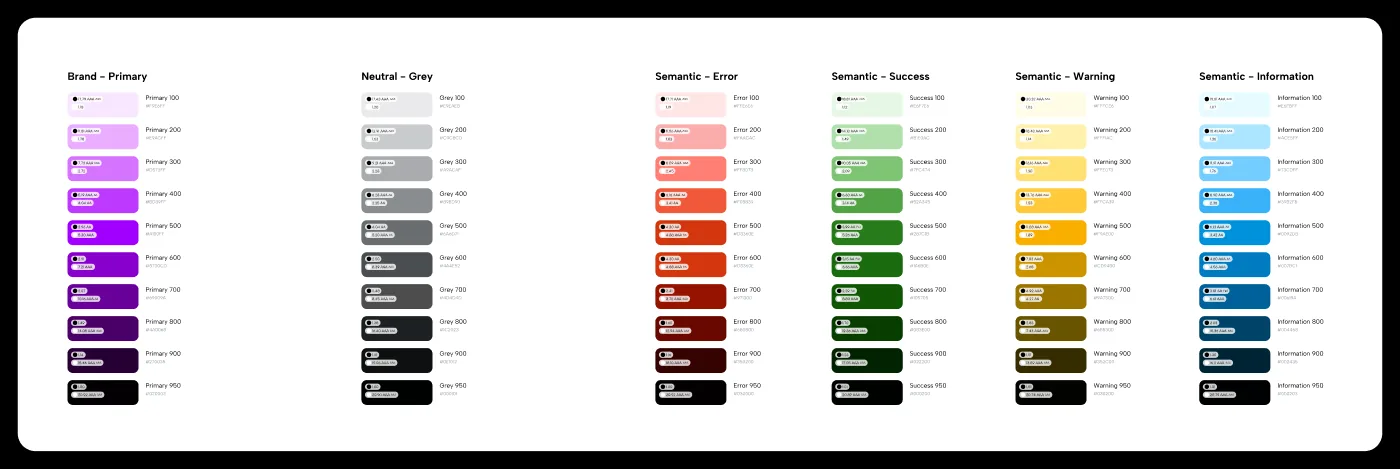
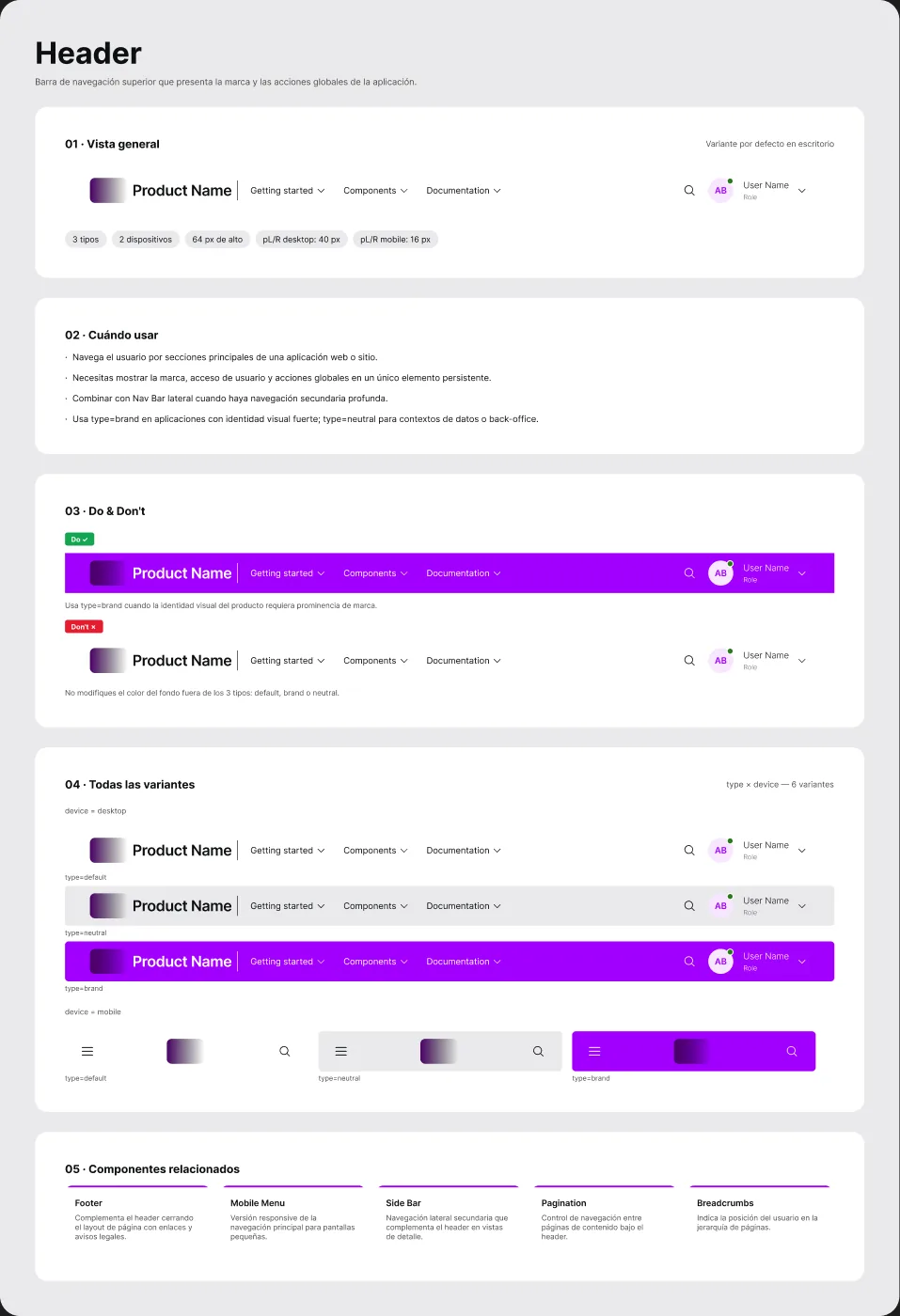
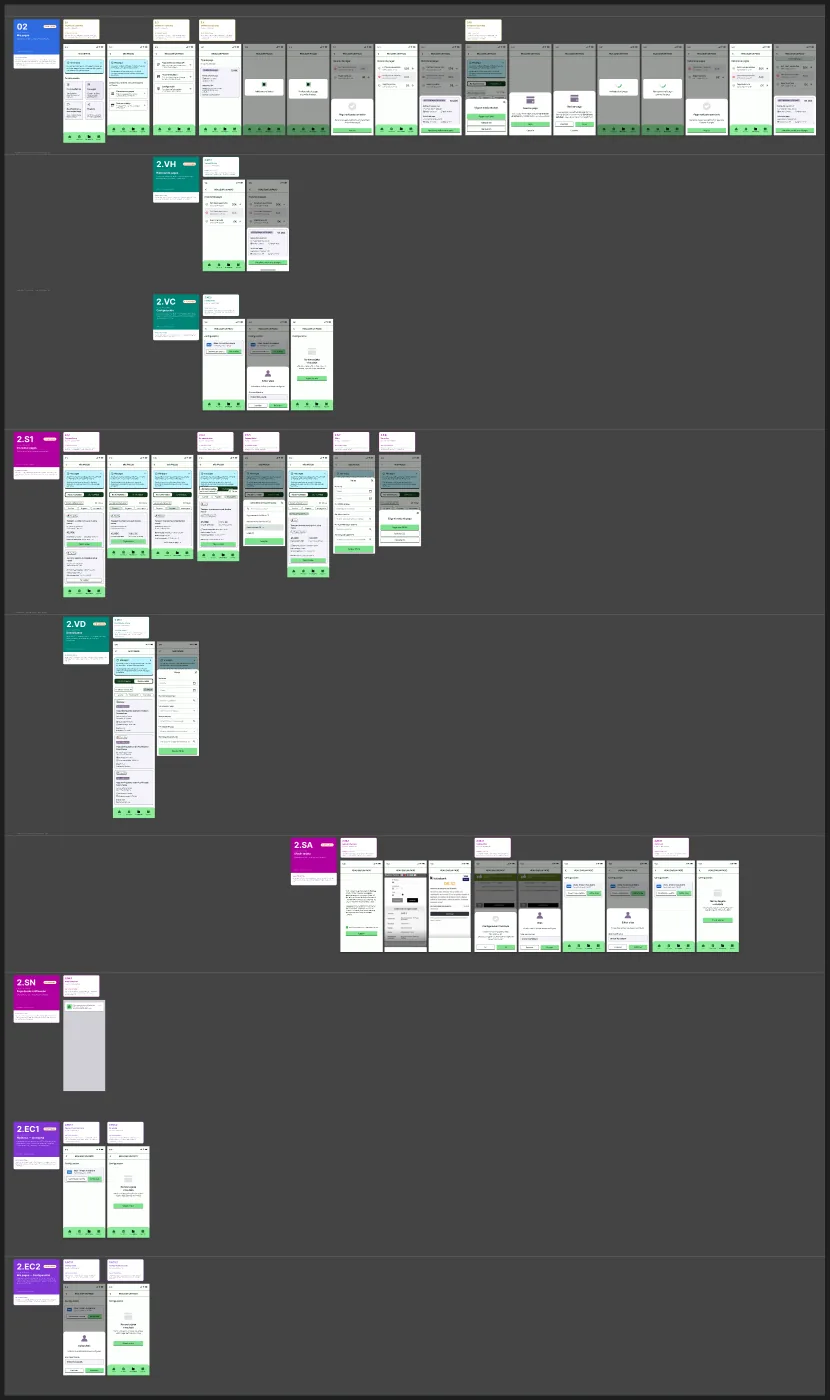
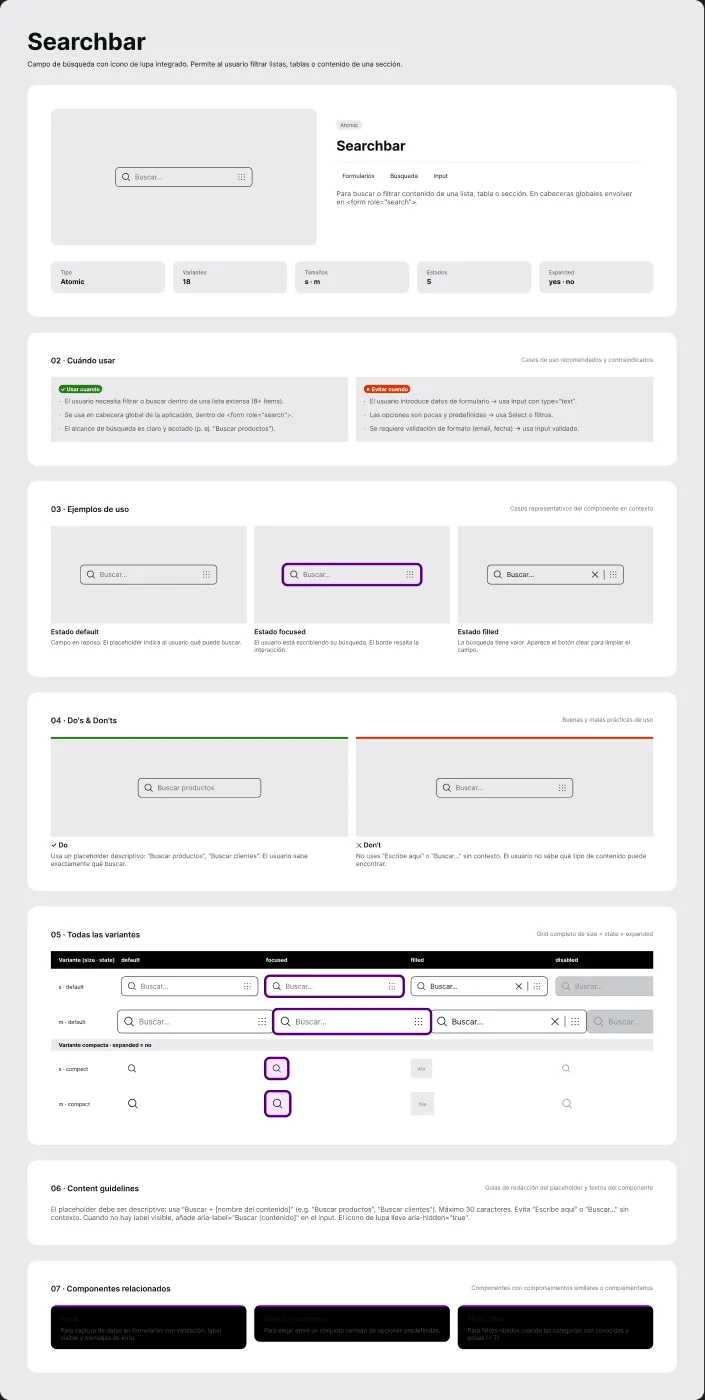
Color system · Header documentation · Flow documentation · Component spec (Searchbar)
The 3 Figma files
The system lives across three interconnected files, each with a distinct purpose.
Covers & Components
The master reference file. Cover templates, flow cover components (Principal, Secondary, Variations, Edge Case), annotation frames, and workshop slides — all built through the Figma Plugin API.
Design System
A fully documented component library for the EMEA ATC team. 17 components — each with Overview, Specifications, Accessibility, Properties, and a DEV description frame — all generated by the documentation agent.
Designs (Working file)
Where actual product flows live. Contains the reference flow (Register, 12 screens) and its full documentation using the cover and annotation system — used as the reference output during Workshop 2.
Design Lab — Workshop series
Two hands-on workshops designed to onboard the EMEA ATC team to AI-assisted Figma workflows. Workshop 1 covered connecting the Figma MCP and building documented components through natural language. Workshop 2 focused on flow documentation — naming conventions, cover system, and the 5-stop prompt workflow for AI-assisted flow annotation. Participants worked live on the Register flow.
Reusable system, not one-off tool
Every decision — templates, naming conventions, prompt structure — was made so the team could own and extend the system independently, without needing a designer in the loop every time.
Documentation as the product
The agent's output matters as much as the agent itself. Every component spec was designed to be self-explanatory — for designers joining the project and for developers picking it up for implementation.
Workshops as capability transfer
Delivering a workflow without teaching it is a dead end. Every participant left with something working in their own Figma file — not just an understanding of what was possible, but proof they could do it themselves.
Key Insight
AI doesn't replace design work — it changes which design work is worth a designer's time. The real shift is moving from manual, repetitive documentation to structured, prompt-driven workflows where the designer defines the system, reviews the output, and spends their time on the decisions that actually require judgment.
02 — Healthcare Platform
Designing for clinical precision.
A major healthcare organization managing clinical nutrition had a fragmented ecosystem — clinical decisions, pharmaceutical workflows, and production processes each living in separate tools, with no shared language and real compliance risk. The brief was to bring it all together into one coherent platform.
Healthcare · End-to-end Platform · Design System
Clinical Nutrition Platform
A platform covering the full journey from prescription to production to delivery. Four distinct user roles — physicians, pharmacists, production teams, and operations staff — each with different responsibilities, permissions, and regulatory constraints. I worked alongside another Product Designer and a UX Researcher.
My role
- Designed end-to-end workflows across all modules
- Led workshops with clinical and pharmaceutical teams
- Built the design system from scratch for a complex, data-heavy platform
- Contributed to the product's visual identity
Key decisions
- Defined system behavior boundaries before touching UI
- Fully separated role views — no shared screens across roles
- Traceability built into every state and transition
- Design system first, screens second — across 6 modules
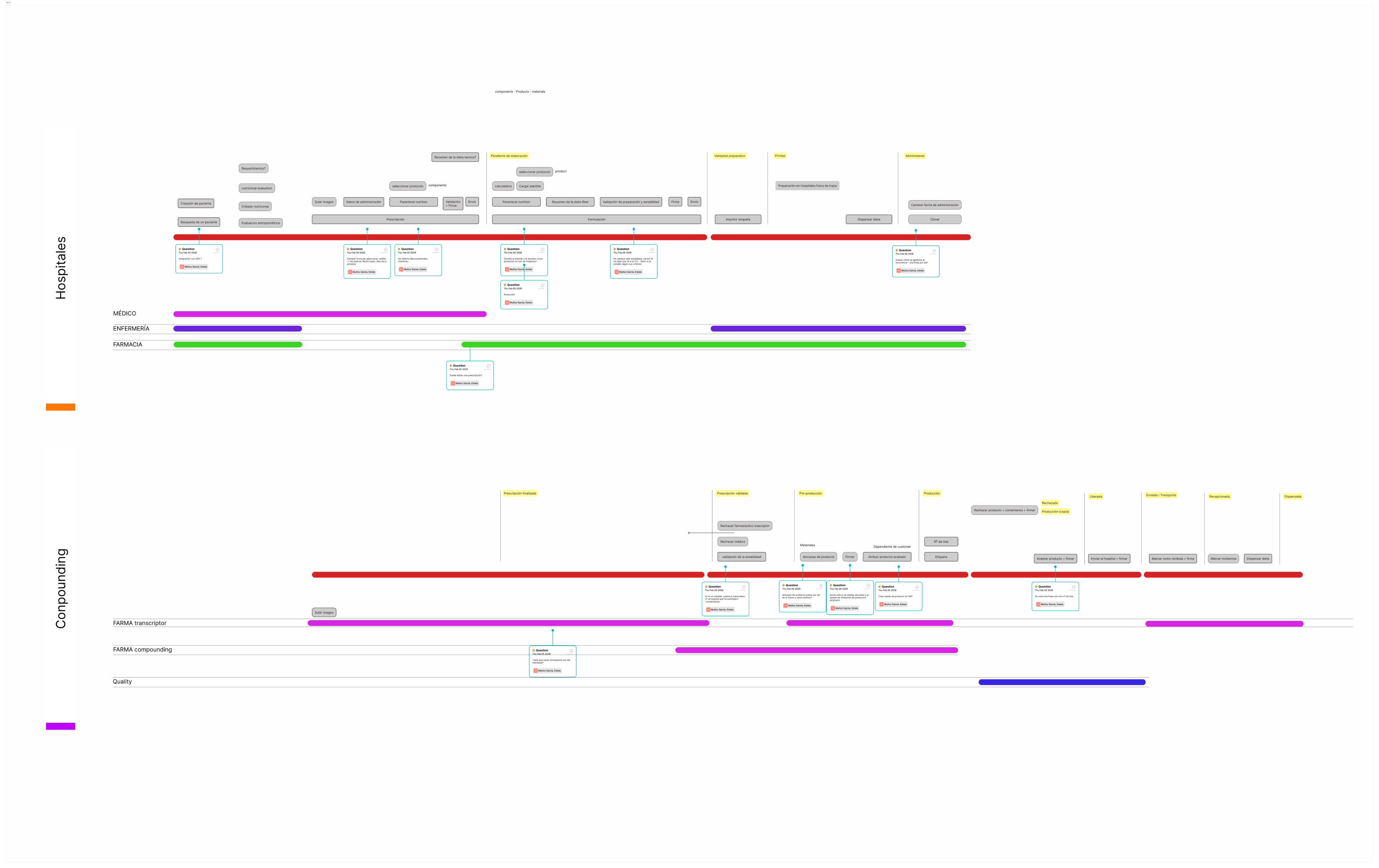
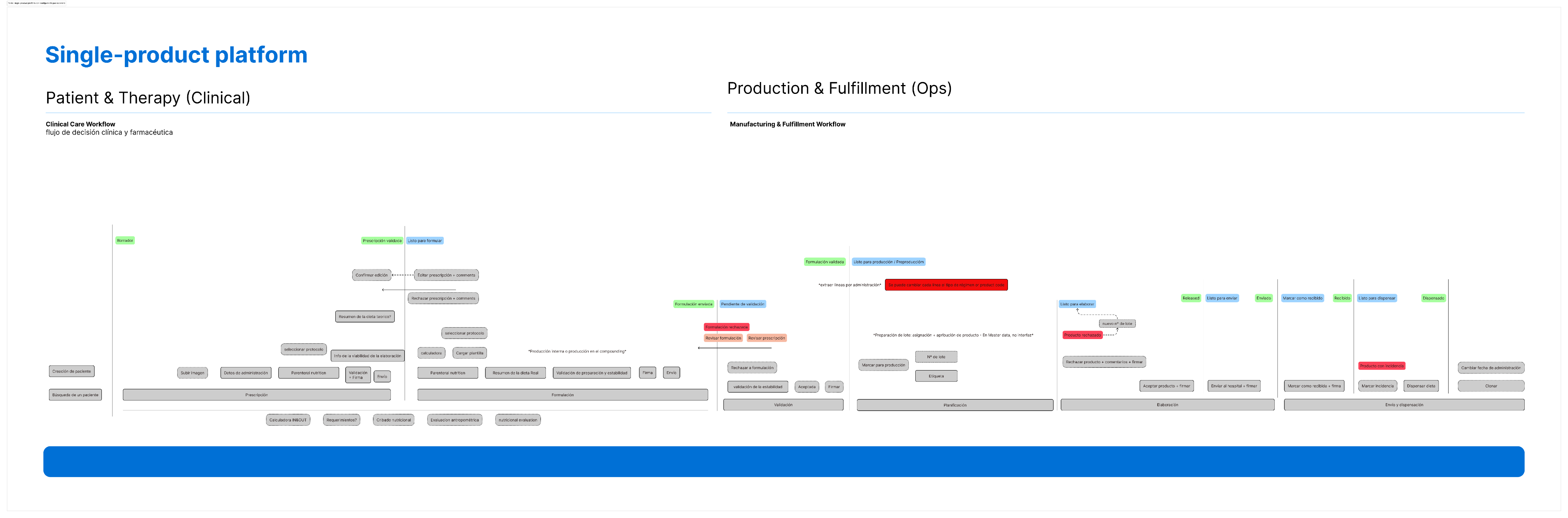
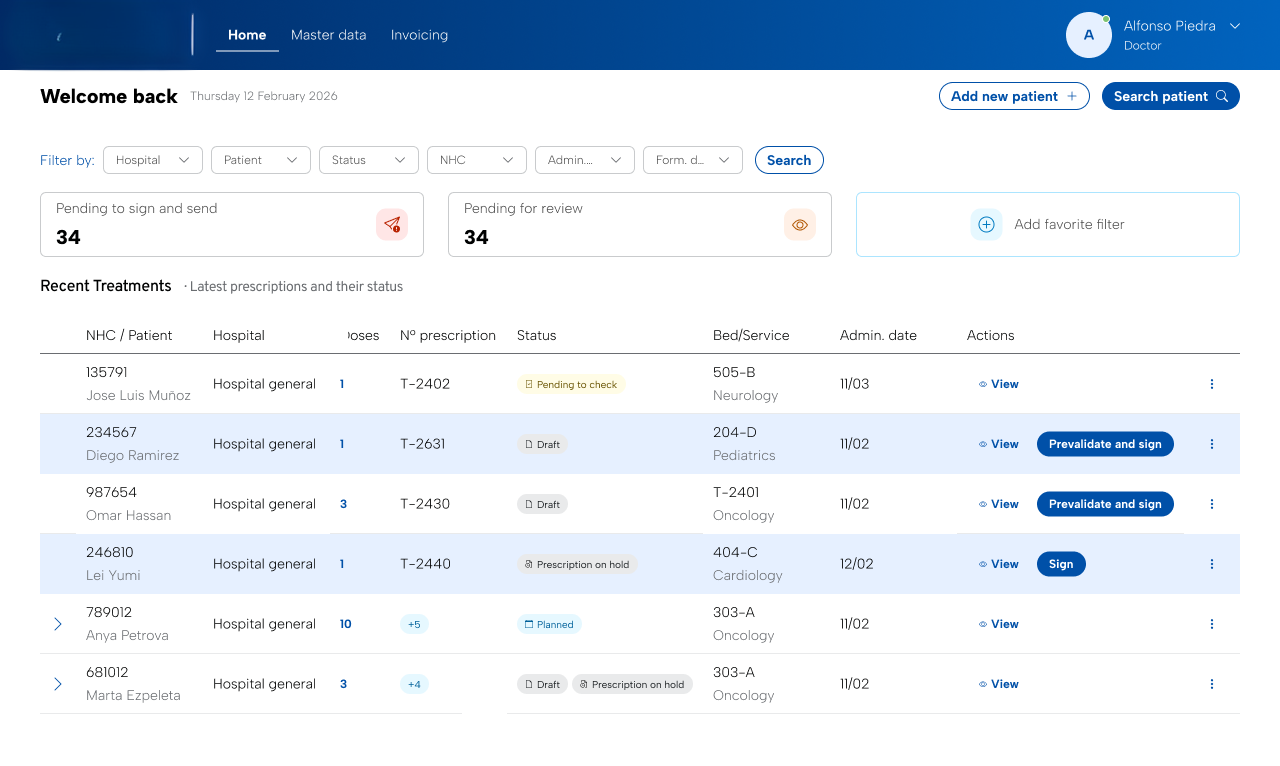
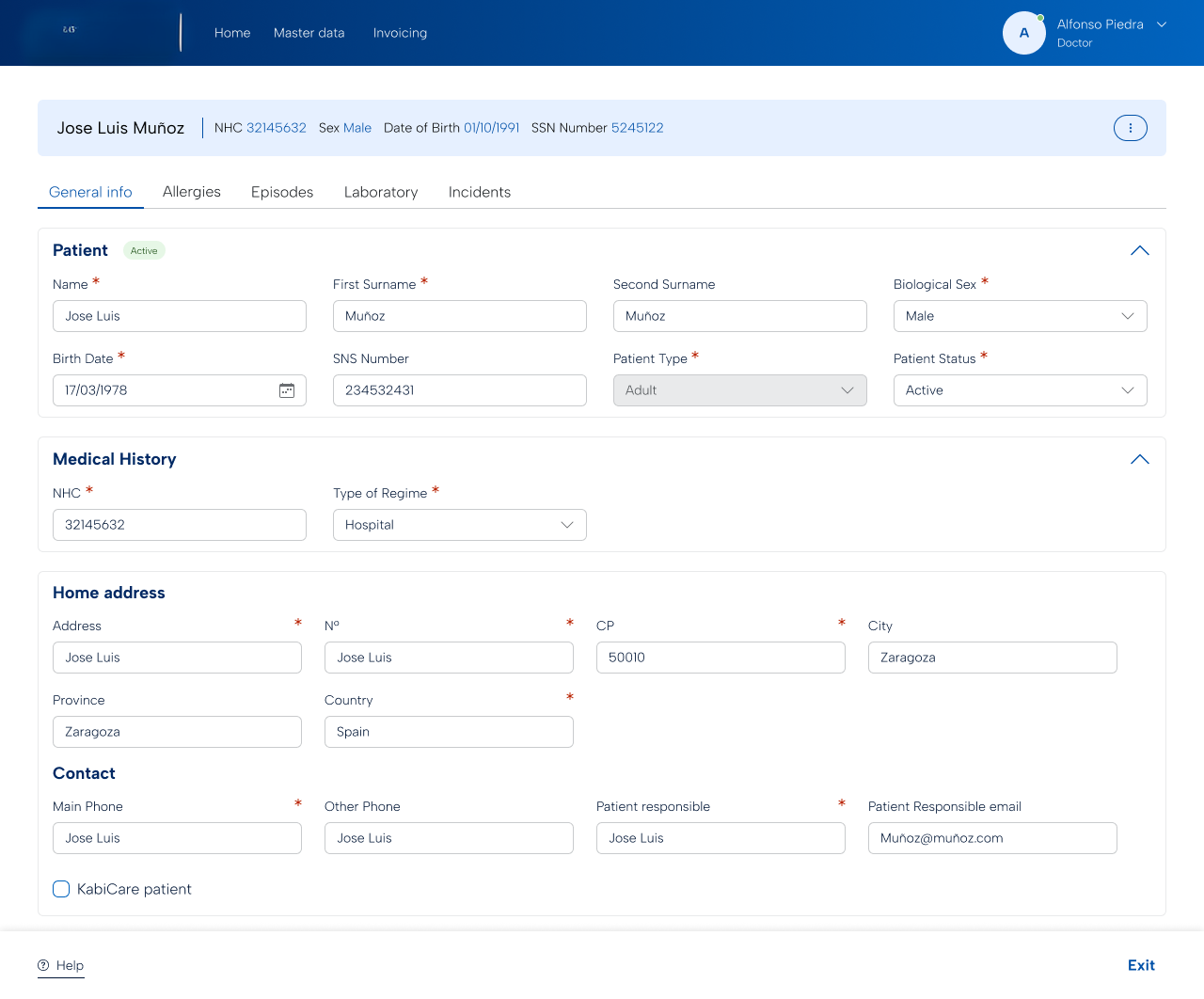
Screens blurred — NDA
Regulatory before UI
Before designing a single screen, we spent weeks mapping what the system was and wasn't allowed to do. Regulatory constraints shaped architecture, not just copy.
Role separation
A physician and a pharmacist see fundamentally different things, with different permissions. Merging views would have created ambiguity where clinical responsibility must be crystal clear.
Traceability by design
Every state change, validation, and modification needed a clear audit trail. Traceability wasn't a feature — it was the foundation every interaction was built on.
Key Insight
The real design challenge wasn't usability — it was translating highly regulated clinical processes into a system that supports decision-making without replacing it. Every screen had to be a tool, never an authority.
03 — Finance and AI
Turning complexity into a pitch.
A large bank had four teams — liquidity, procurement, securitizations, and accounting — each working through disconnected tools and manual processes. The ask wasn't just to design a product. It was to design something compelling enough to secure CFO-level funding for an AI transformation. I came in with zero banking knowledge and had to learn the domain before I could design anything.
Finance · AI · Internal Tool · 4 modules
Internal Finance AI Platform
A suite of four AI-powered modules — liquidity management, procurement, securitizations, and accounting — unified under a consistent design language. The true deliverable wasn't the screens themselves but the vision they communicated: what AI could realistically do for financial operations, shown in a way that non-designers could understand and fund.
My role
- Sole designer across all 4 modules
- Flows from scratch per financial domain
- High-fidelity mockups and interactive prototypes
- Animated walkthrough videos for stakeholder demos
- Participated in CFO-level demo sessions
Key outcomes
- Strong positive feedback across all stakeholder areas
- Design became the foundation for future AI development
- Proved design-led storytelling as a tool for exec buy-in
- Aligned 4 financial areas around a shared vision
ALM 360 — Liquidity Management
Real-time liquidity risk visualization and AI-driven scenario projection. Teams can monitor their position, run simulations, and receive automated recommendations — replacing a process that previously lived in spreadsheets.
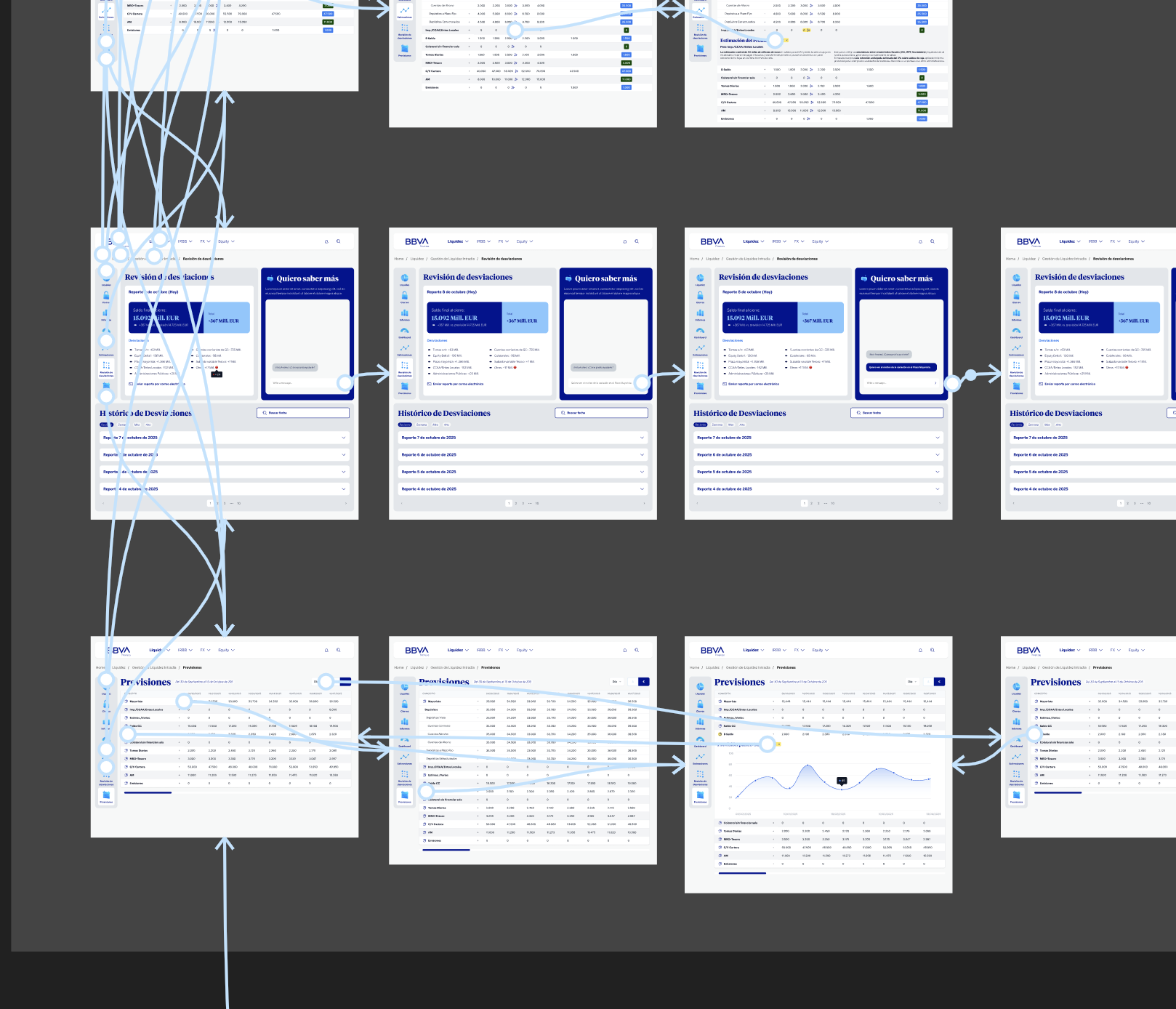
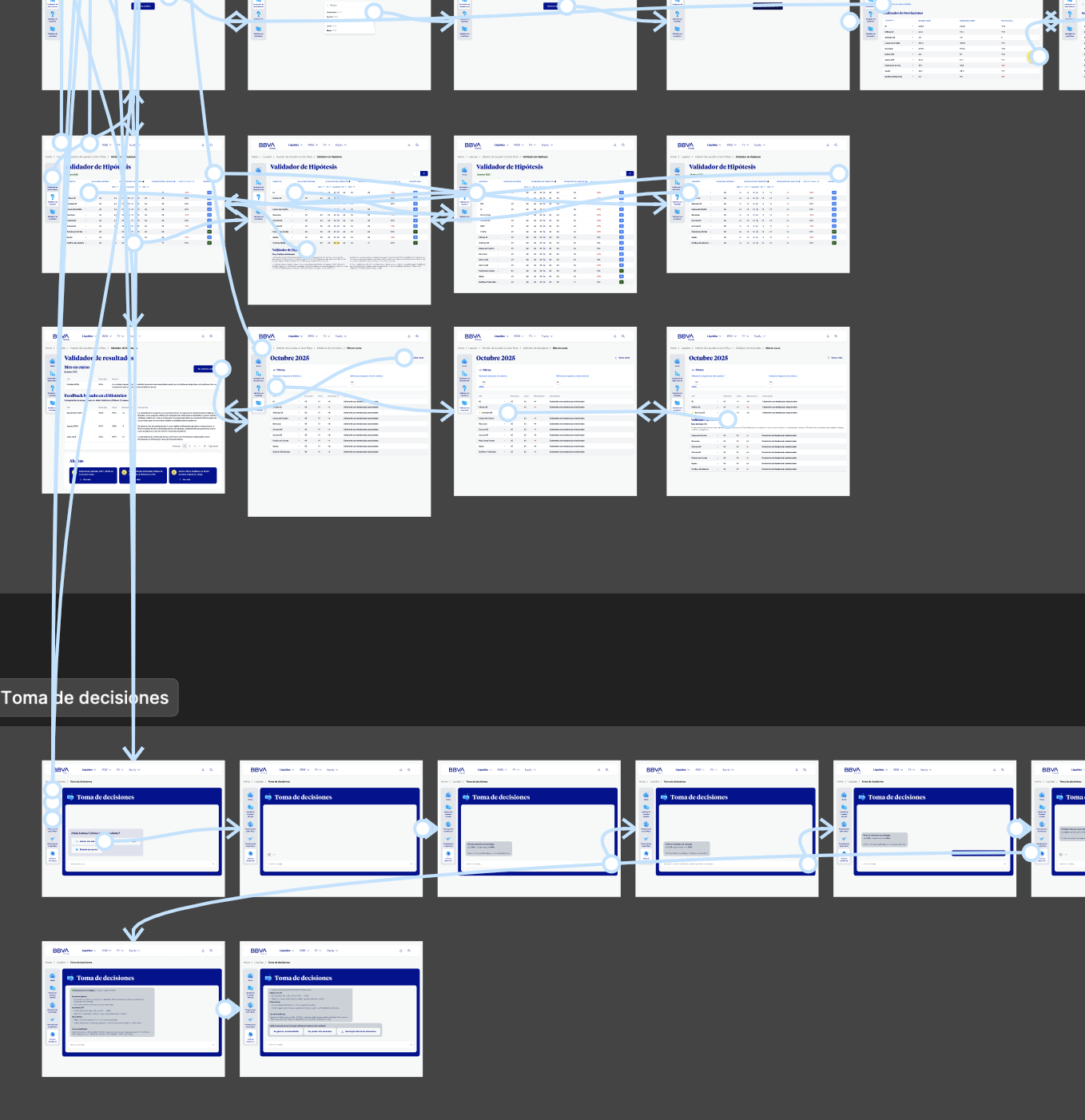
Screens blurred — NDA
Procurement
A conversational AI assistant for purchase request management. It reduced approval friction, centralized requests in one place, and eliminated the email chains that were slowing down the entire procurement cycle.
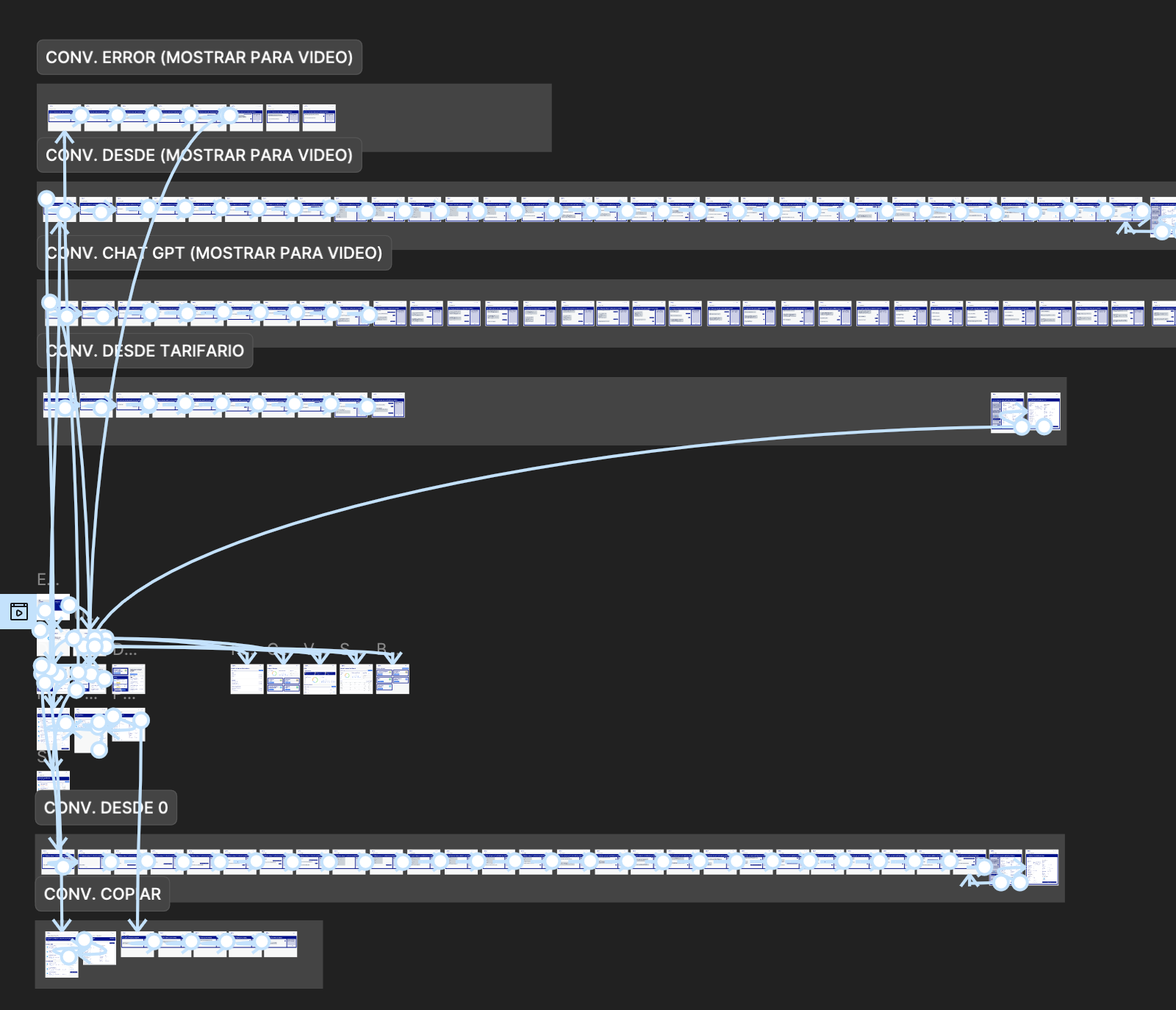
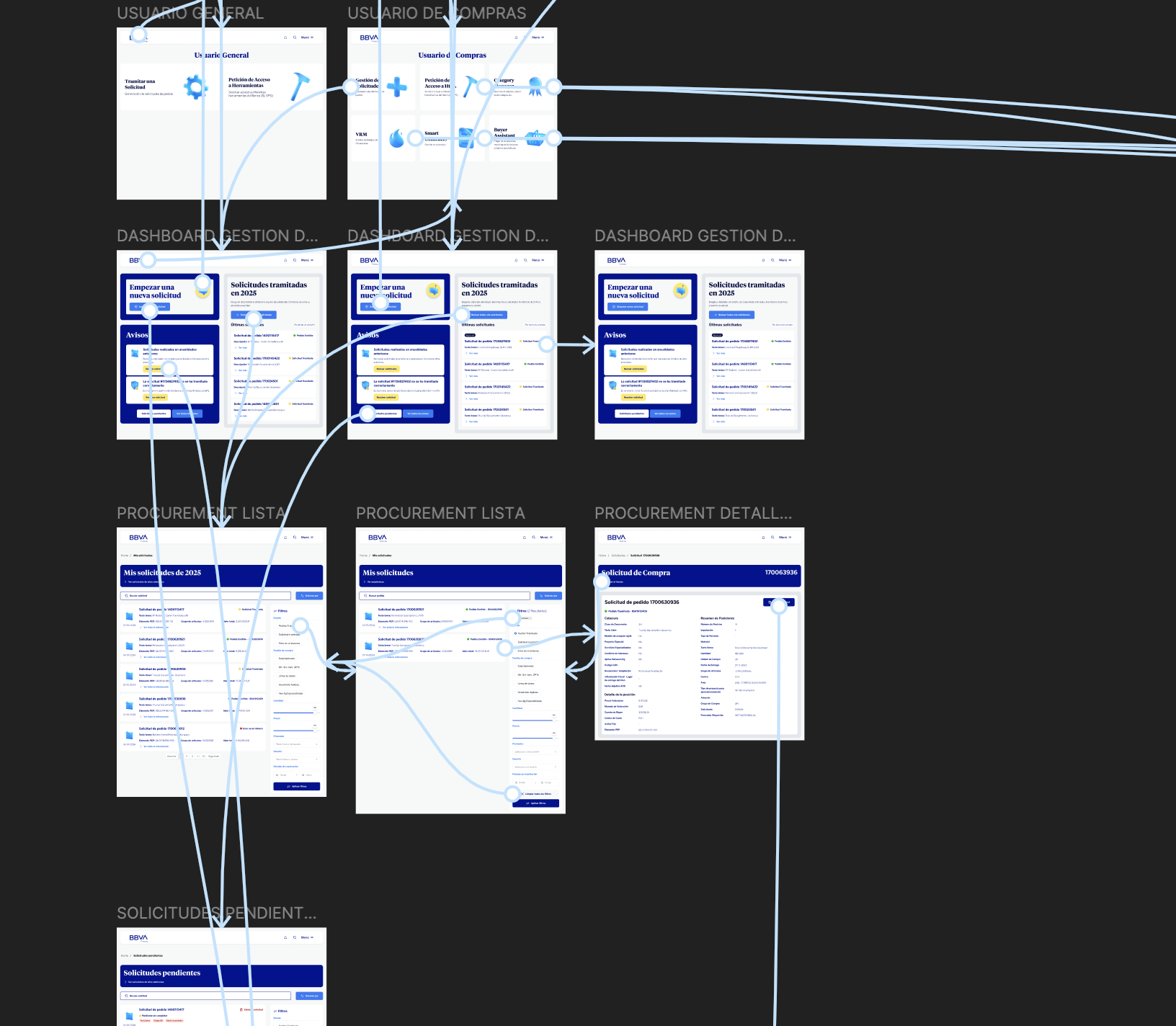
Screens blurred — NDA
Securitizations
An analytical workflow for portfolio exploration and financial scenario simulation. Teams can compare strategies using AI-generated insights, replacing a process that previously required cross-referencing multiple disconnected systems.
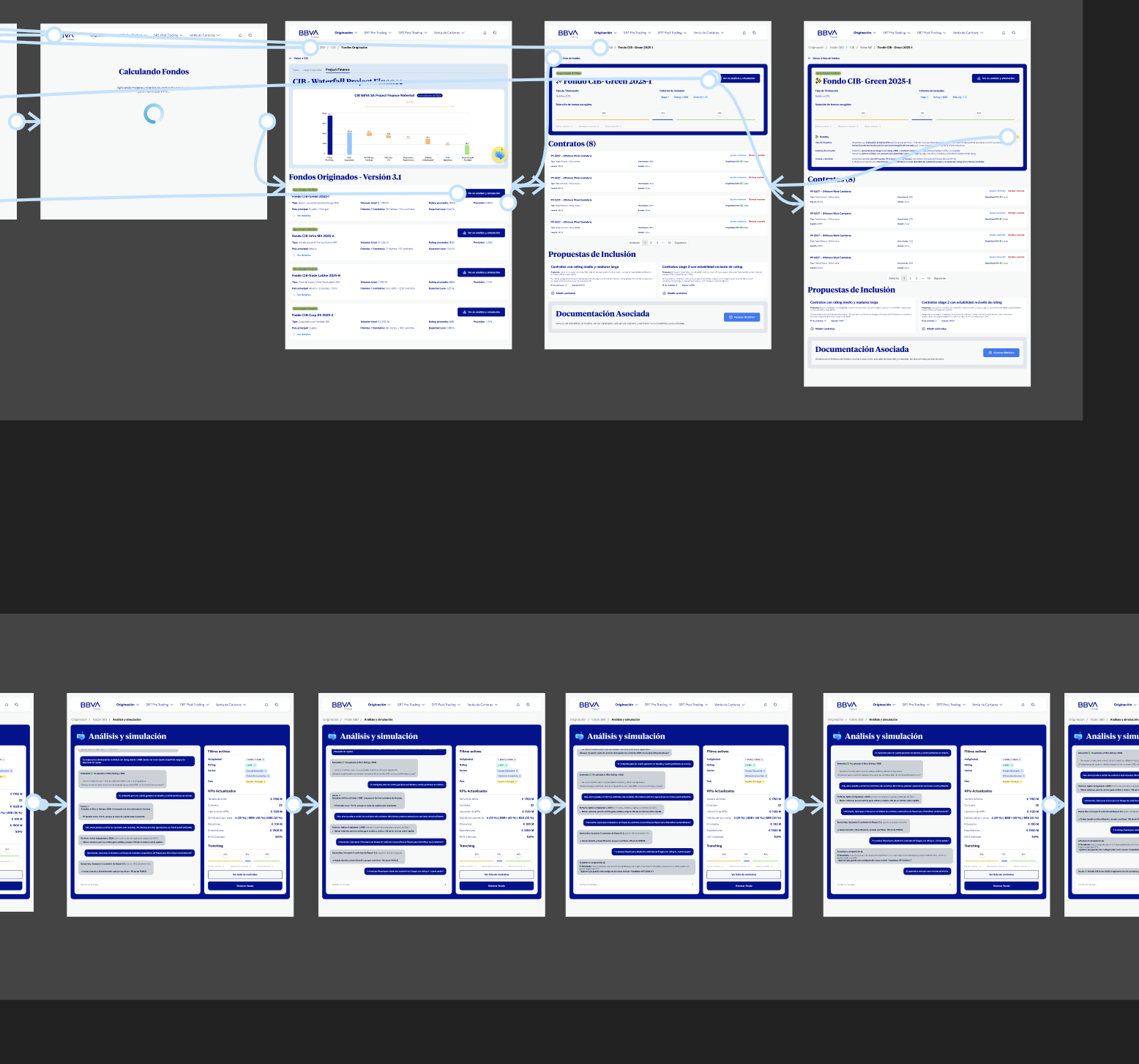
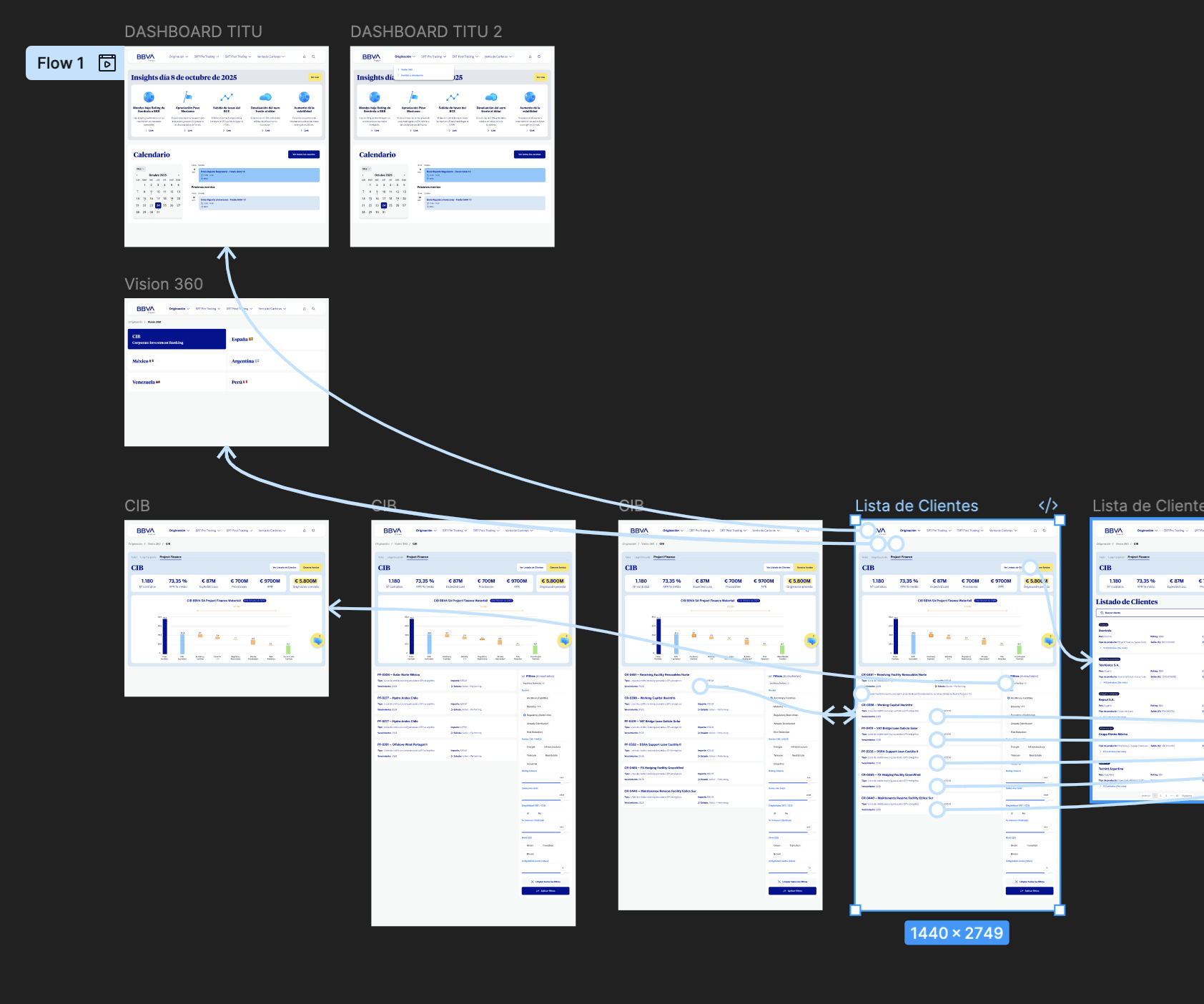
Screens blurred — NDA
Accounting
A reporting agent for risk and sanitation analysis, with side-by-side comparison of holding, local, and dual accounting views — bringing into one screen what previously required switching between three separate tools.
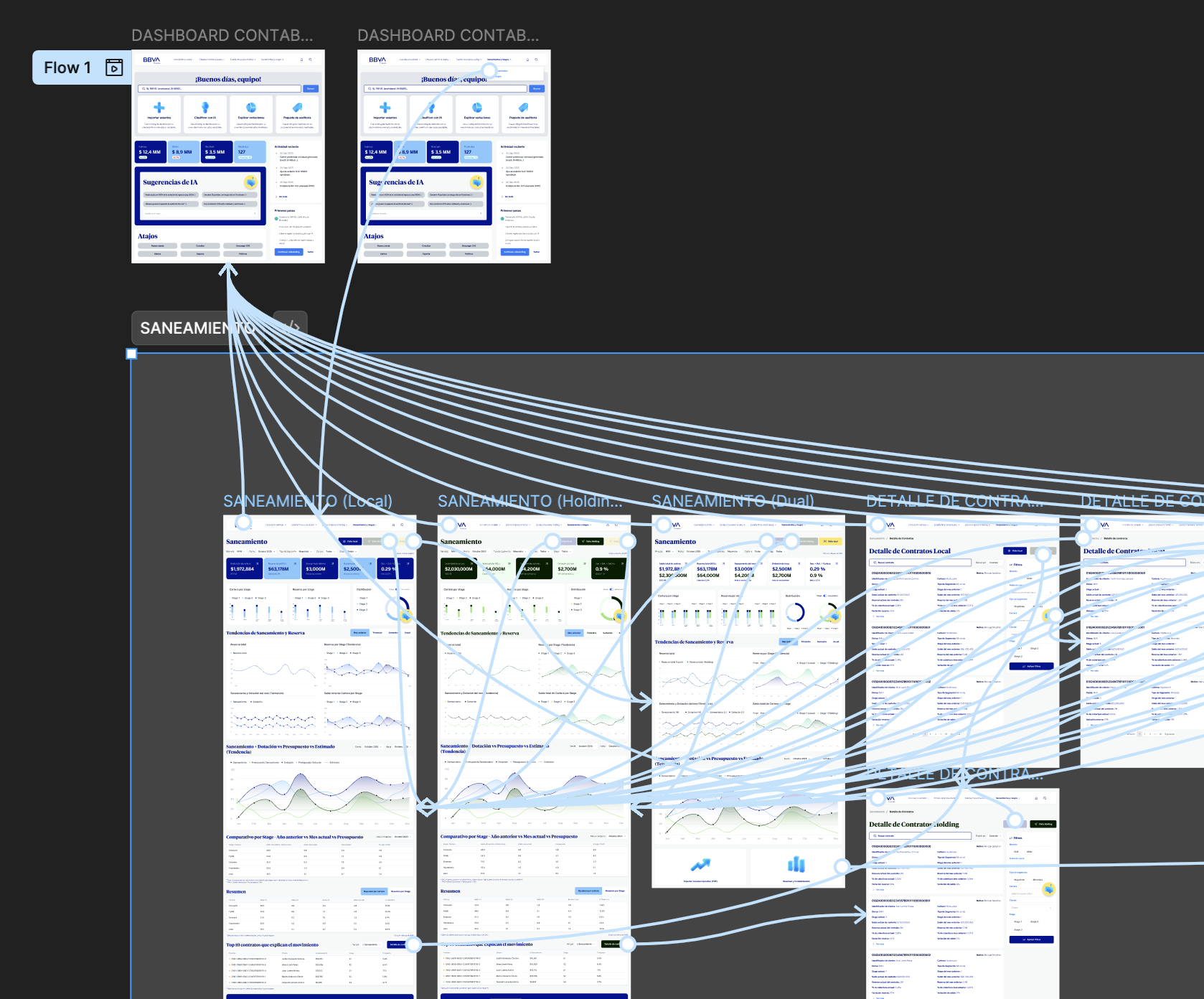
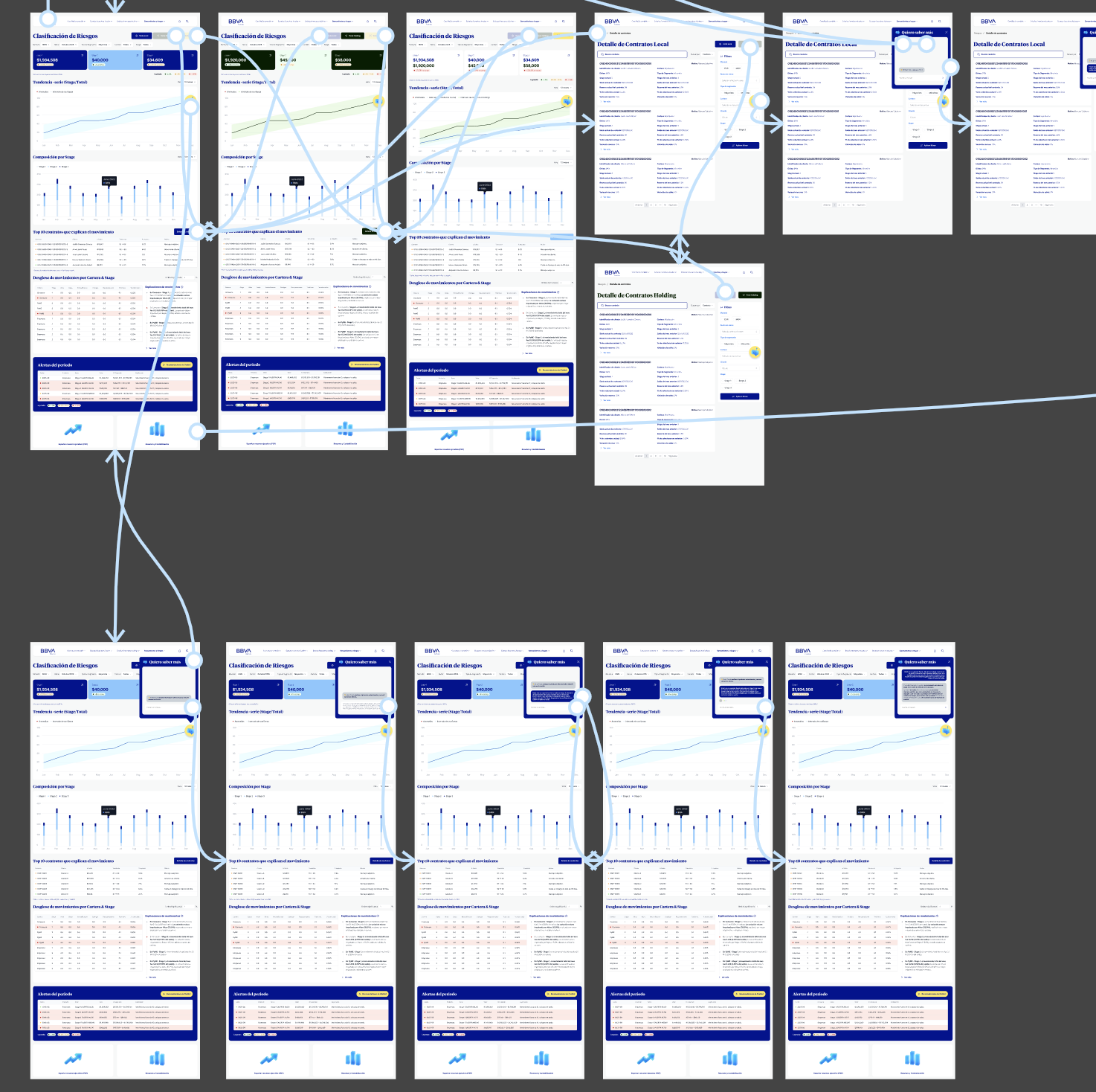
Screens blurred — NDA
Domain first
Without financial background, the first weeks were pure learning. Designing without understanding liquidity management or securitization logic would have produced generic screens that didn't reflect how the work actually happens.
Each area = its own product
Despite sharing a visual language, each module had fundamentally different user goals and data structures. Designing them as a monolith would have forced compromises that hurt every team.
Design as the story
The real deliverable wasn't the screens — it was the vision they communicated. High-fidelity mockups and animated demos were the vehicle to convince CFOs to fund an AI transformation initiative.
Key Insight
Every financial team operated as its own world. The real challenge wasn't building interfaces — it was learning complex financial logic fast enough to design something that actually reflected how the work happens, without oversimplifying it.
04 — Public Sector App
Building the foundation, not just the screens.
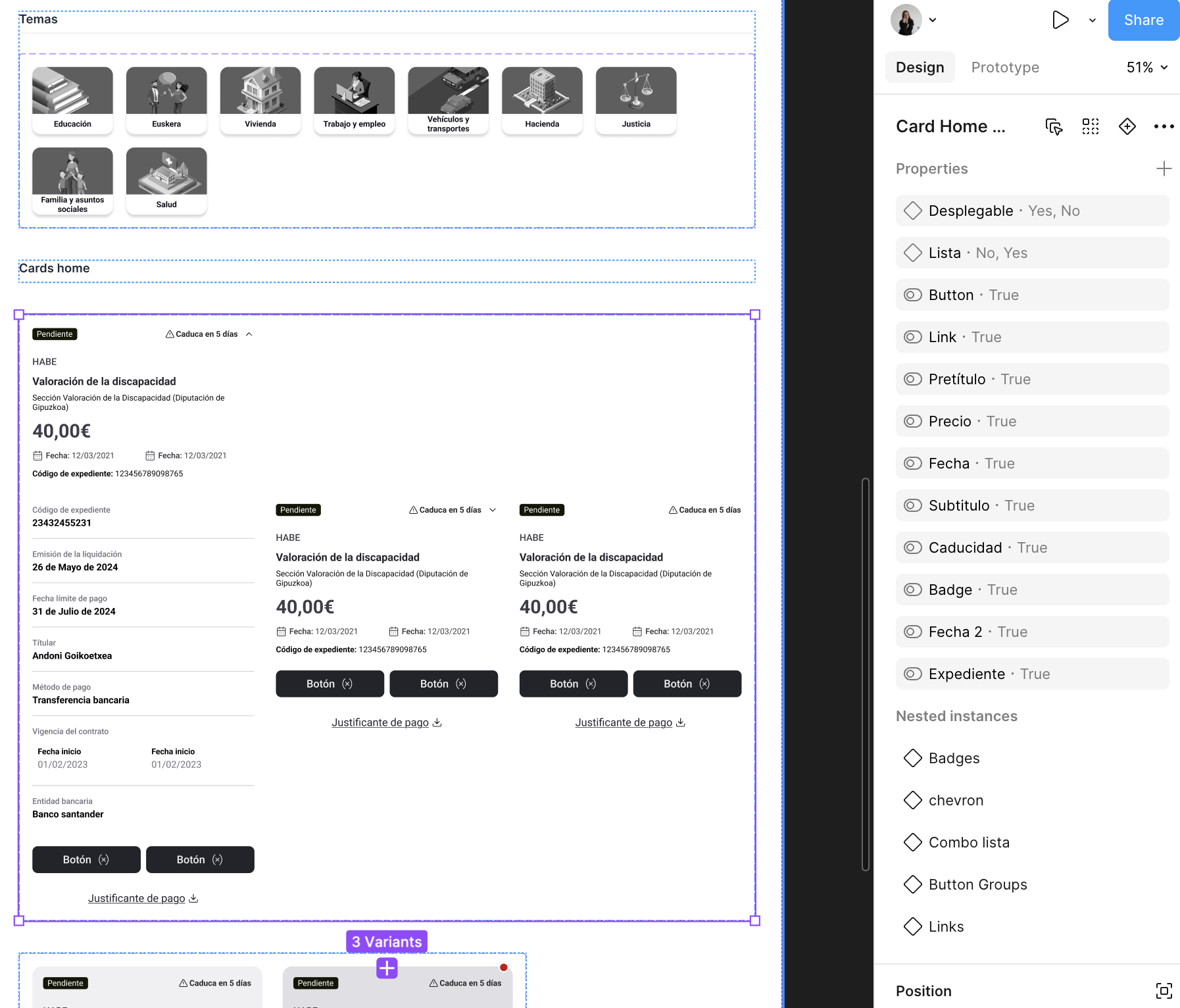
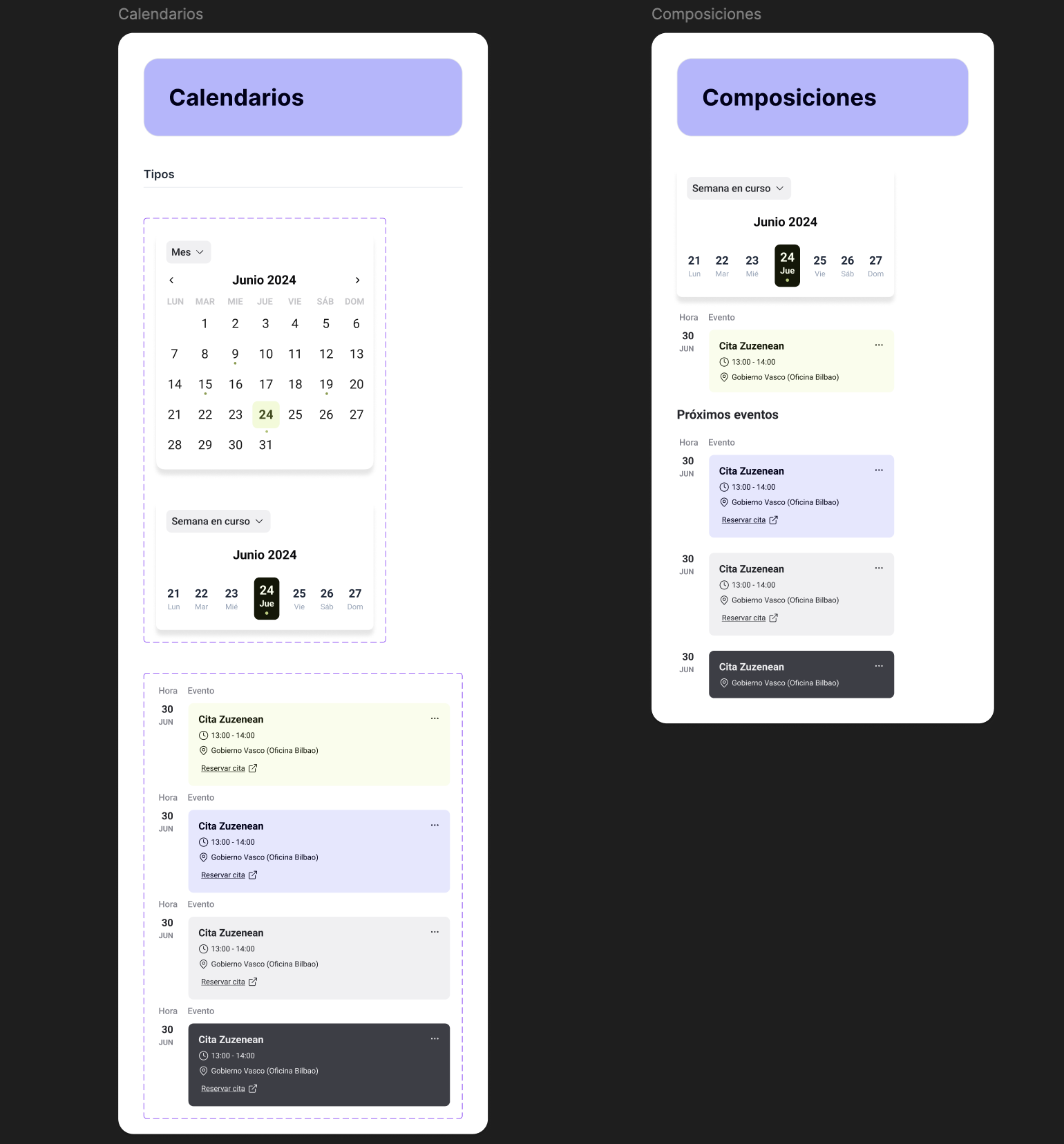
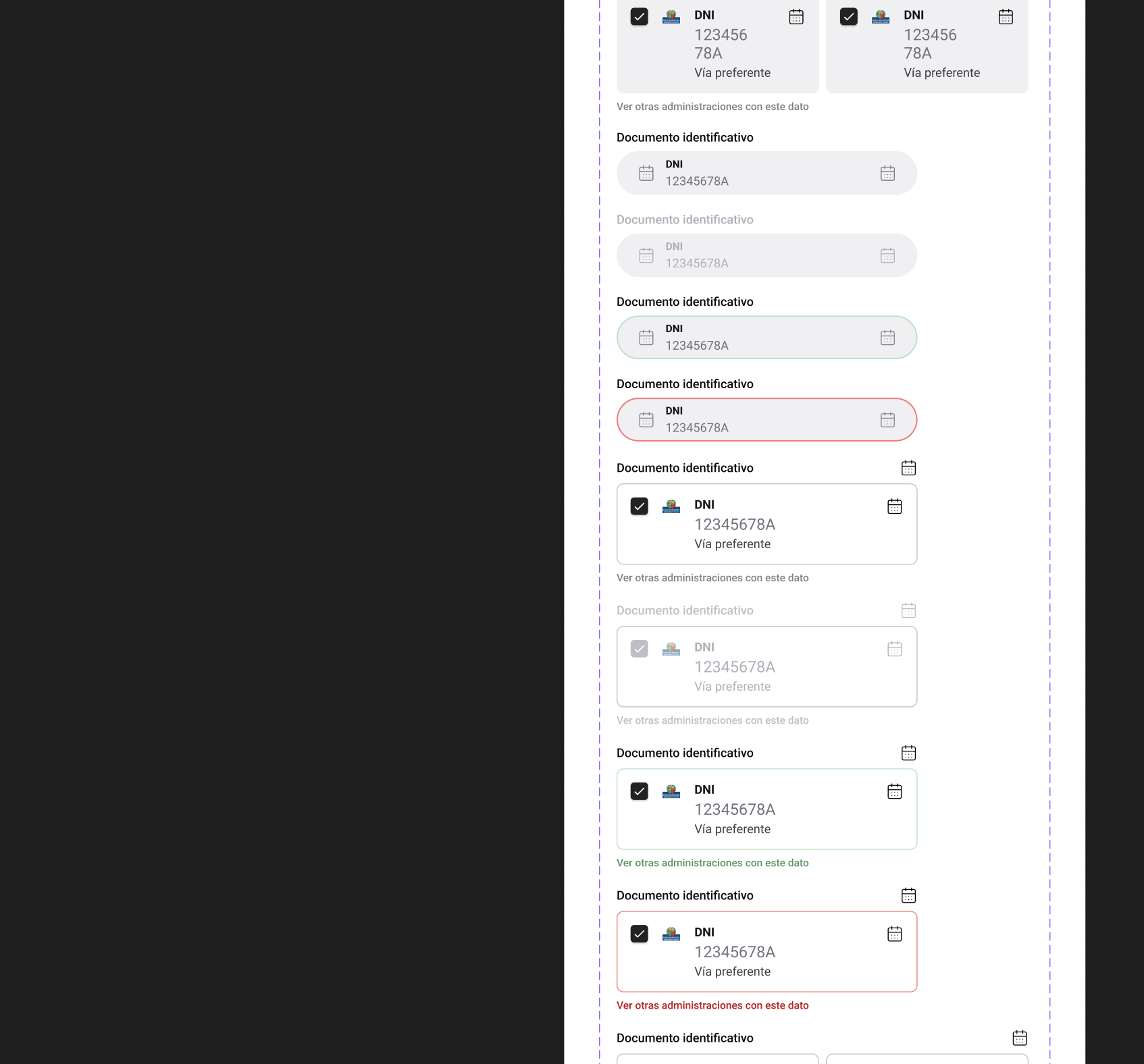
A regional public administration was building a citizen-facing mobile app — a single entry point for everyday public services: appointments, certificates, permits. When I joined, the prototype was already advanced, but there was no design system behind it. The interface was inconsistent, undocumented, and impossible to scale.
Public Sector · Design System · Mobile · Knowledge Transfer
Citizen Services App — Design System
A structural overhaul of an existing citizen-facing mobile app. The mandate: audit what exists, rebuild the foundations, and create a design system scalable enough to survive future branding changes and be maintained by an internal team — without me in the room.
My role
- Full audit of existing components and prototype
- Defined design foundations and tokens (colour, spacing, typography)
- Rebuilt and redesigned existing components
- Established naming conventions and component structure
- 3-week daily training sessions for internal knowledge transfer
Key outcomes
- Clean, consistent, fully documented component library
- Wireframes aligned with the design system
- Single source of truth for future design and dev work
- Internal team able to continue independently after handoff
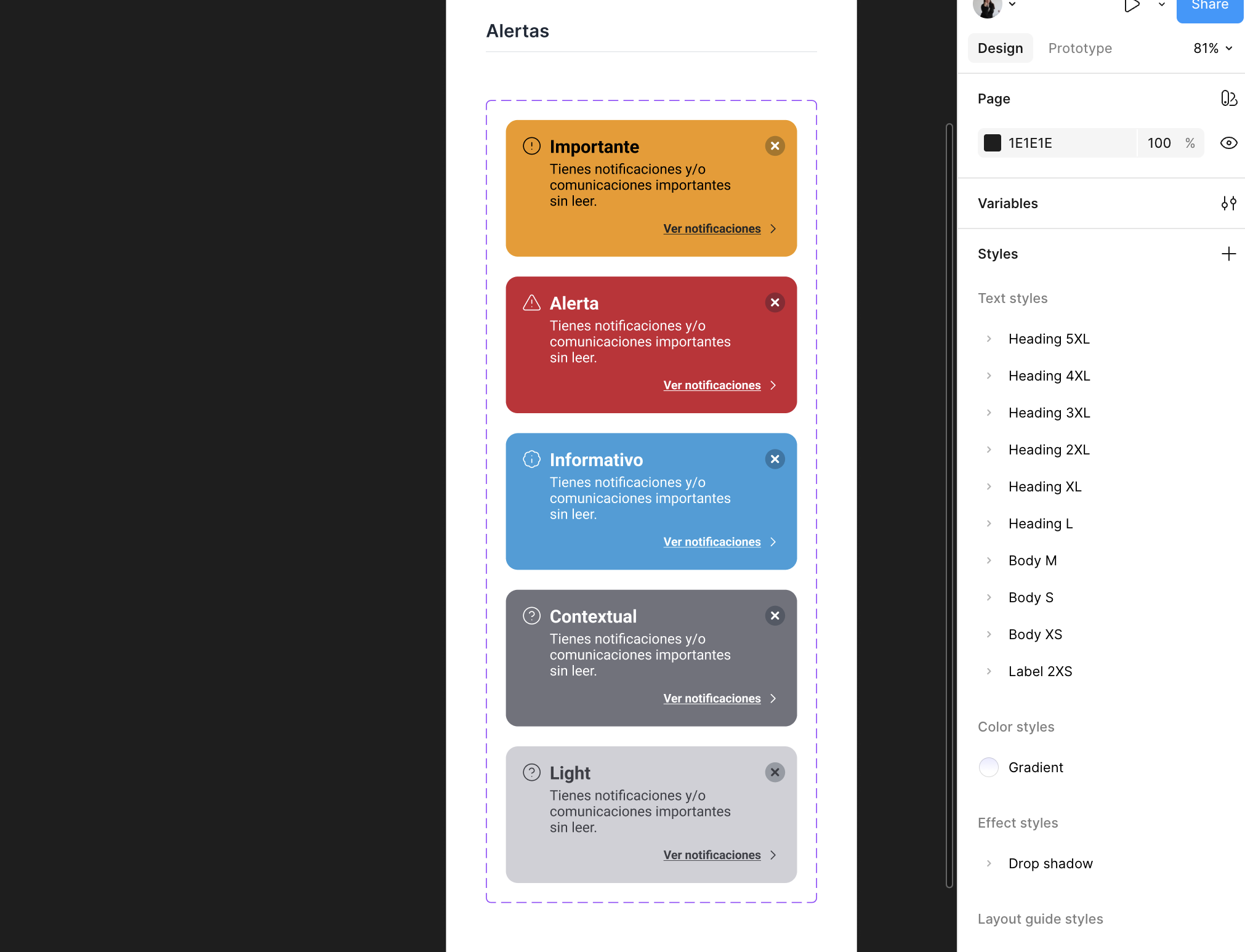
Screens blurred — NDA
Audit before redesign
Jumping into new components before understanding what already existed would have created duplication and broken existing flows. The audit wasn't overhead — it was the only responsible starting point.
Brand-agnostic foundations
The final visual identity hadn't been decided. Building the system with tokens from day one meant the whole library could be recolored and rebranded without touching a single component's structure.
System over screens
A polished screen that can't be replicated is worse than a consistent system. The most valuable thing I could leave was a structure that the internal team could understand, maintain, and grow without needing a designer constantly present.
Key Insight
Government digital products are often built by developers without designers. The highest-value contribution wasn't execution — it was establishing the vocabulary, structure, and documentation that would allow the system to grow consistently, long after I left.
05 — Learnings
What Accenture actually taught me.
Three sectors, three completely different environments. These are the things I keep carrying with me.
Domain knowledge is a design skill.
Consulting means jumping between worlds — healthcare one month, financial risk the next. You don't design well what you don't understand. I've learned to spend the first weeks really listening: sitting with doctors, bankers, civil servants, understanding how they think before touching Figma. That time is never wasted.
Being the only designer sharpens judgment.
Most of my time at Accenture I was the only designer on the project. No one to review your work, no team to bounce ideas off. At first that's uncomfortable. Then it teaches you to trust your instincts, document your reasoning, and know when to fight for something and when to let it go. It builds a kind of confidence you don't get any other way.
Systems thinking outlasts screen thinking.
The screens I'm most proud of aren't the prettiest ones — they're the ones built on solid foundations. A design system a team can actually maintain after you leave, a naming convention they can understand without a manual, a structure that survives rebranding. That's the work that actually keeps giving.
